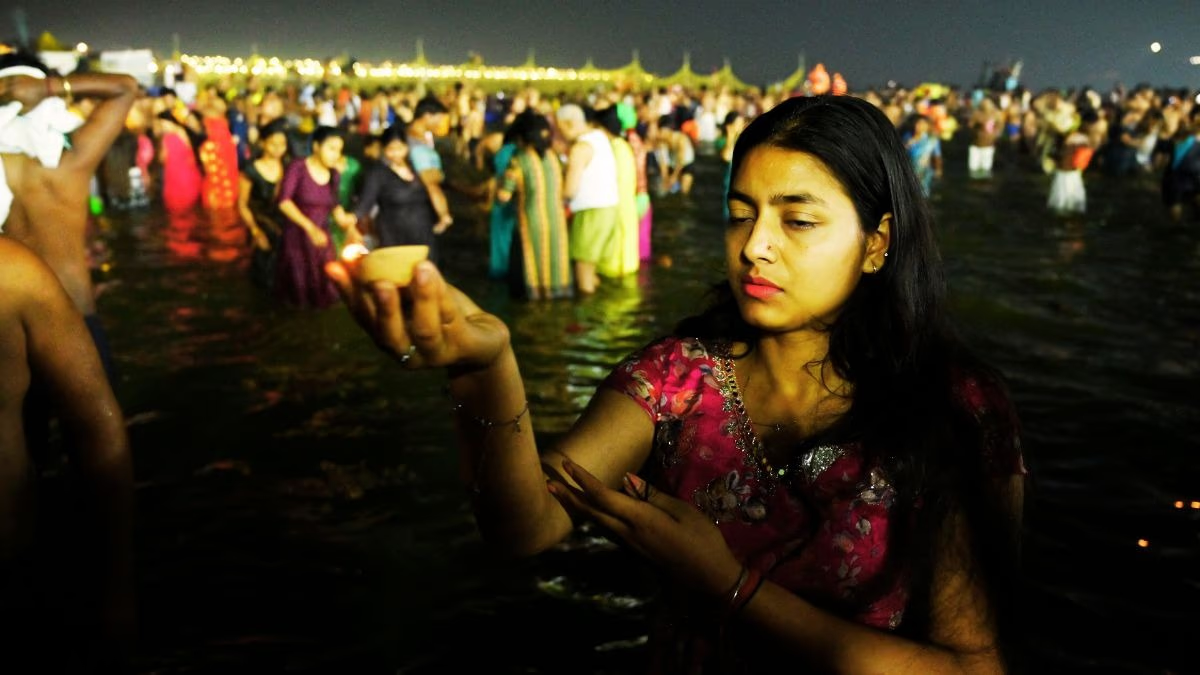
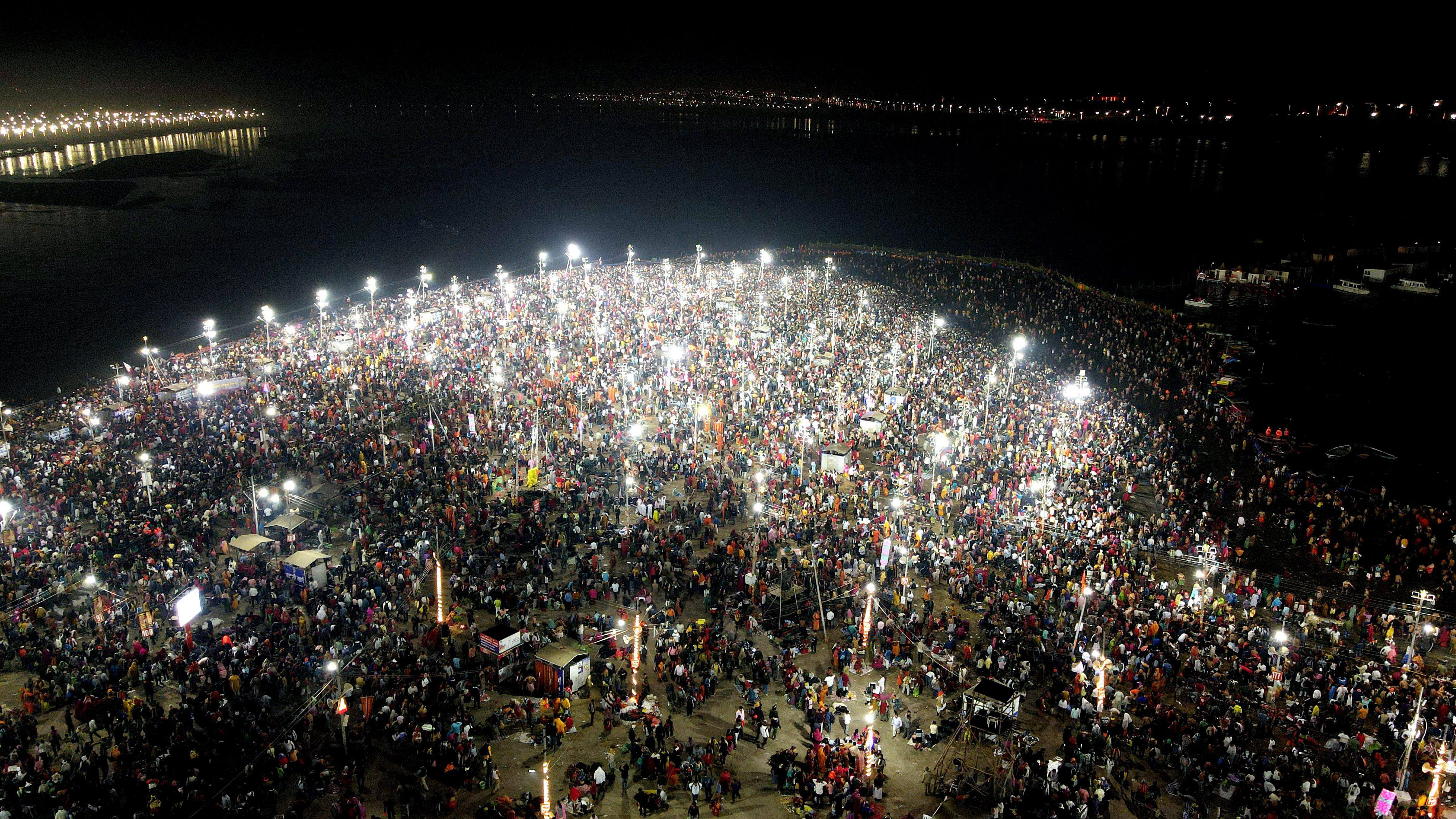
Today is the final holy bath of the world's largest religious gathering, 'Prayagraj Mahakumbh 2025'. This divine and grand event spanned 45 days, during which more than 650 million devotees took a holy plunge in the Sangam. With the celebration of Maha Shivaratri, this number is expected to rise even more. This remarkable confluence of faith, culture, and spirituality became a historic event with saints, sages, and believers from across the globe.
All 13 prominent Akharas participated in the Mahakumbh. The mesmerizing processions of Naga Babas, with their unique Hatha yoga, penance, and meditation, were a significant attraction.
The number of attendees at the Prayagraj Mahakumbh surpassed the total population of many countries. Only India and China have populations exceeding the number of participants at this Mahakumbh.
Source: aajtak
When were the royal baths?
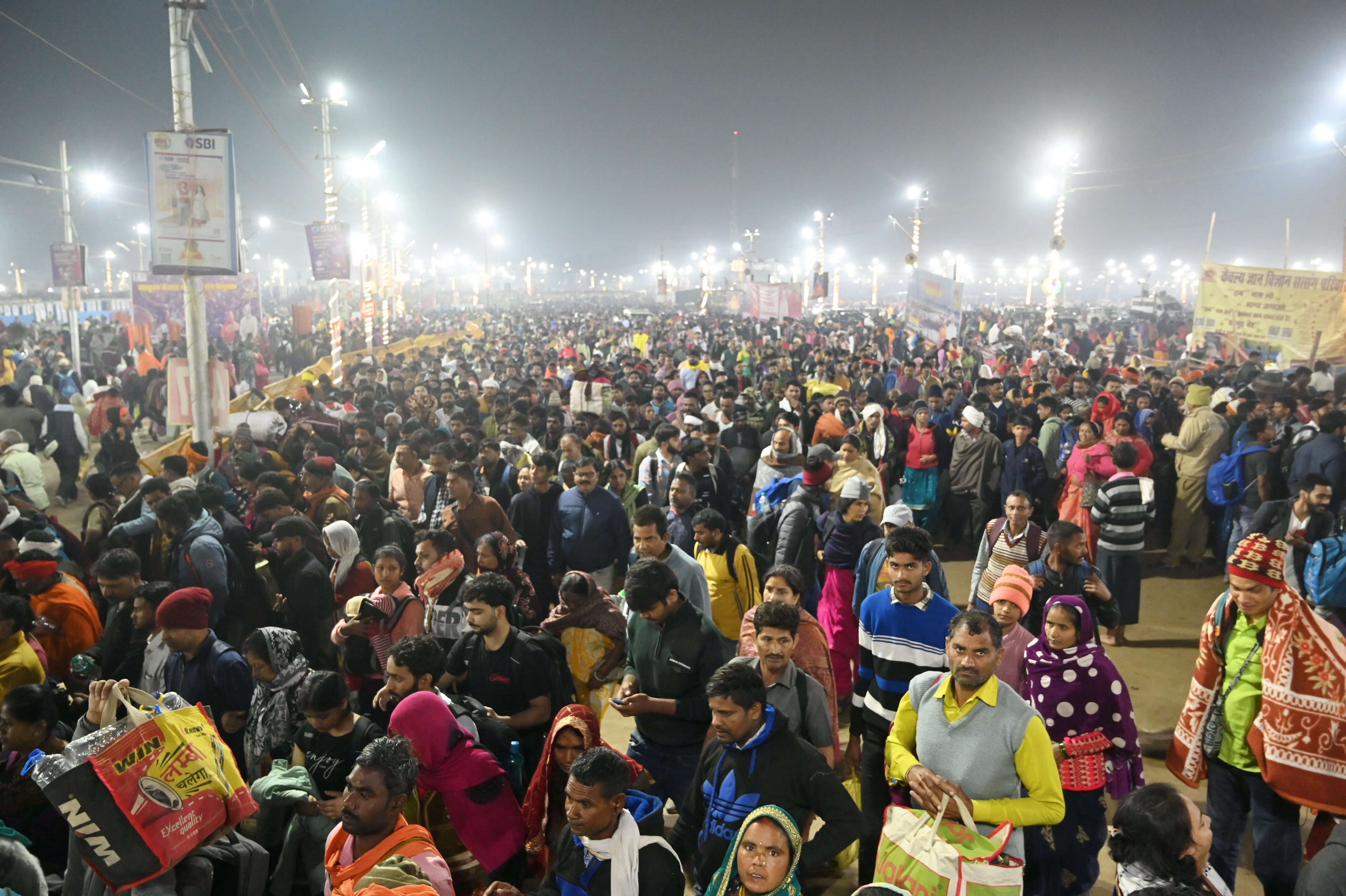
There were six royal baths held between January 13 and February 26, 2025, each significant not only religiously but also culturally and historically.
January 13 - The First Royal Bath
January 14 - Makar Sankranti Bath
January 29 - Mauni Amavasya Bath
February 2 - Basant Panchami Bath
February 12 - Magha Purnima Bath
February 26 - Maha Shivaratri Bath (Final Royal Bath)
Source: aajtak
The Mythological Tale of Samudra Manthan and Mahakumbh!
The Mahakumbh festival is held every 12 years, rooted in the legend of Samudra Manthan (Churning of the Ocean). It is believed that during the churning, drops of divine nectar fell at Haridwar, Ujjain, Prayagraj, and Nashik. These four locations are where the Mahakumbh is celebrated.
Innovative Technology... Counting Devotees with AI
For the first time at Mahakumbh 2025, Artificial Intelligence (AI) was utilized. The Uttar Pradesh government deployed over 500 AI cameras to count devotees. These cameras gathered data using technologies like crowd density mapping, head counting, and face recognition.
Mahakumbh 2025 covered an expanse of 4,000 hectares (15,812 acres) and was divided into 25 sectors. Along the Sangam banks, 41 bathing ghats were established. For convenience, the administration set up 102 parking locations, 7 entryways, and 24 satellite parking areas for the devotees.

Source: aajtak
The Extensive Expansion of the Sangam Nose
The Sangam Nose holds immense significance during Mahakumbh, where the rivers Ganga, Yamuna, and the mystical Saraswati converge. This time, the Sangam Nose was extended further with recommendations from IIT Guwahati experts, adding an extra 2 hectares capable of parking 630 vehicles.
The Government's Temporary District Initiative for the Fair
Observing the vastness of Mahakumbh, the Yogi government established a temporary district, 'Mahakumbh Mela,' incorporating 67 villages from four tehsils. Temporary police stations, administrative offices, and checkpoints were set up.
Seven-Layered Security Systems at Mahakumbh
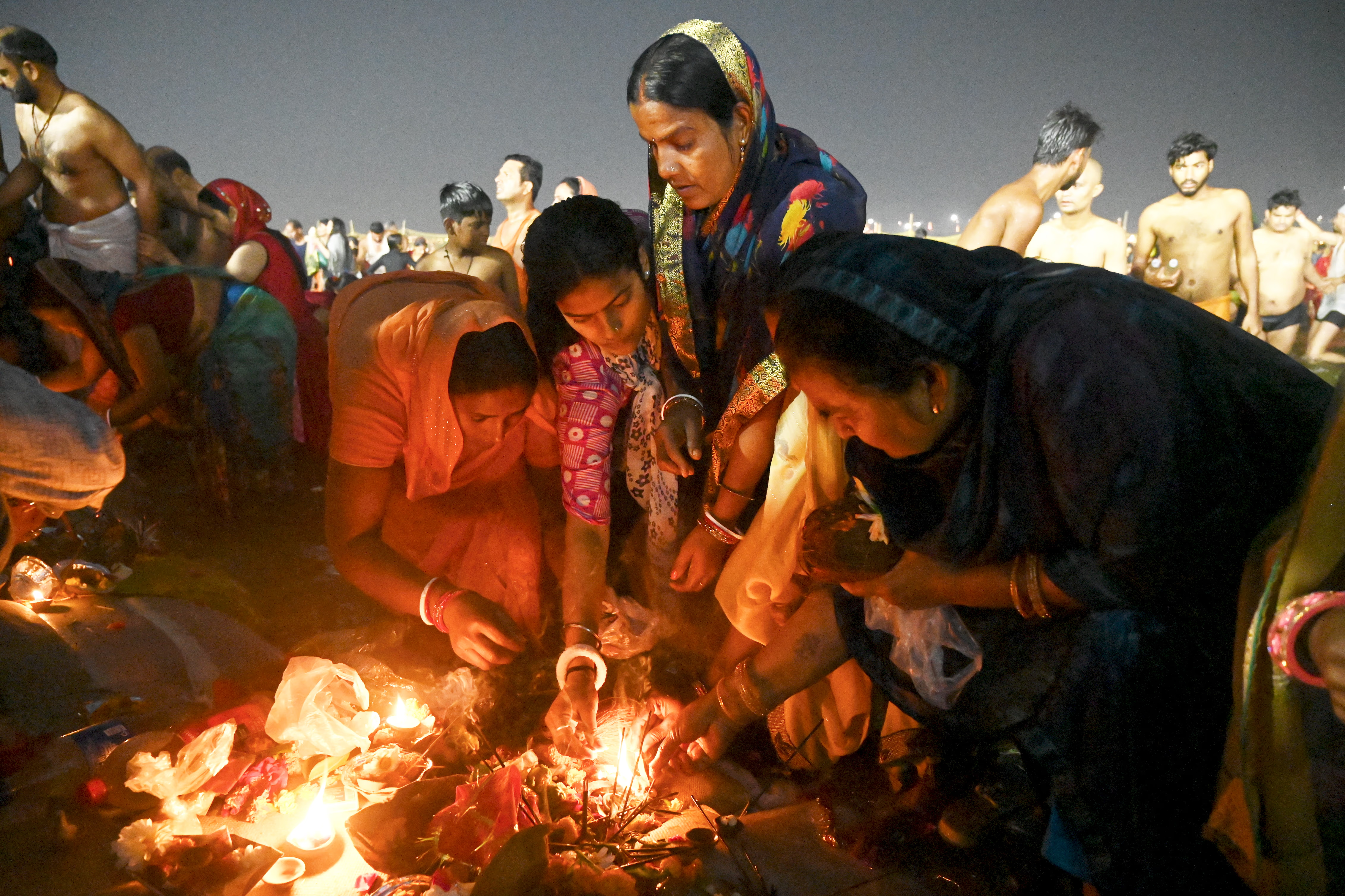
For the safety of pilgrims, a seven-tier security system was in place at Mahakumbh. It included NSG commandos, personnel from the UP Police, and over 300 divers. Water ambulances were deployed to address emergencies during the bathing rituals.
Source: aajtak
Accommodation for over 10 million people was arranged, including a tent city of 2,000 camps, 42 luxury hotels, 204 guesthouses, 90 dharamshalas, and shelters with 3,000 beds.
Google Maps' Unique Initiative
Google Maps launched special features for the fair, marking all major locations like bridges, ashrams, Akharas, roads, and parking sites, aiding devotees in easily navigating the fair area.
Prayagraj Mahakumbh 2025 etched its mark in history with its grand scale, unprecedented attendance, and modern technological applications. It was more than a religious festival; it was the grandest celebration of Indian culture, spirituality, and faith.
The Next Kumbh: 2028 Ujjain Simhastha Mahaparv
Following Prayagraj, the next Kumbh will be the Ujjain Simhastha Mahaparv in 2028, held along the banks of the Shipra River between March and May. Ujjain is home to the Mahakaleshwar Jyotirlinga, one of the twelve Jyotirlingas.