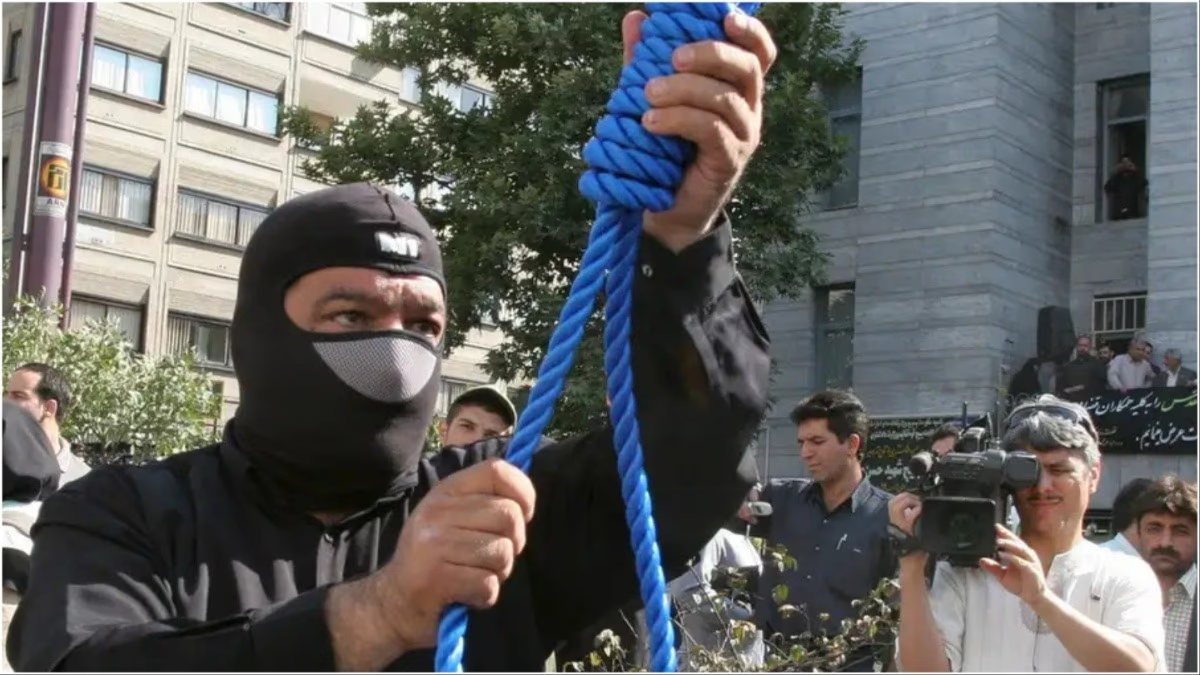
The United States, renowned for advocating human rights worldwide, revealed a stark contrast at home. In a historic record, 2025 saw 47 executions within its borders, a peak not reached since 2009.
Under Donald Trump's Republican leadership, the momentum for capital punishment gained significant traction in the U.S. Political environments became increasingly supportive, limiting the judiciary's role. The ‘Death Penalty Information Center 2025’ report highlighted that the trend reflects the growing disparity between legislative decisions and public sentiment.
Public surveys across America indicate a declining endorsement for the death penalty. Some states adopted controversial approaches, such as nitrogen gas chambers and firing squads. Florida recorded the highest increase with 19 executions in 2025.
Legal experts in the report voiced concerns over policy changes and reduced federal court oversight contributing to the rise in executions. An academic pointed out the system's lack of safety nets compared to past practices.
In Saudi Arabia, executions surged dramatically, driven by strict drug laws. Human rights organizations and analysts noted that this accounted for the sharp rise.
Saudi Arabia executed 356 individuals in 2025, marking the highest annual total on record.
Analysts attribute the rise primarily to the nation's stringent 'war on drugs' policies. Many executed had been detained years prior and were sentenced after prolonged legal proceedings. Official figures indicate 243 of the 356 executions in 2025 were drug-related.
Amidst criticism, Saudi Crown Prince Mohammed bin Salman initially placed a temporary halt on drug-related death penalties. However, three years later, in late 2022, Saudi Arabia resumed executions for drug offenses, predominantly impacting foreign nationals.
Under 'Vision 2030,' Saudi Arabia aims to transform its conservative Islamic image. Nevertheless, these executions mar its human rights record, drawing continued scrutiny.