America's leading newspapers, 'The New York Times' and 'The Washington Post', were privy to the impending military action on Venezuela shortly before it commenced. Despite this awareness, both publications opted to withhold the information, prioritizing the safety of American soldiers.
An American news website, www.semafor.com, revealed that high-ranking editors from these newspapers were briefed with sensitive military details before the operation, according to individuals familiar with communications between the Trump administration and media establishments. Following internal deliberations, newsrooms of both outlets decided to temporarily suppress the news to ensure the safety of the American personnel involved in the operation.
This decision reflects a longstanding tradition in American journalism, which exercises restraint on national security issues, particularly when lives are at stake. This step is deemed especially significant given the tense relationships between President Donald Trump and traditional media outlets in recent years.
America Detains Maduro with His Wife
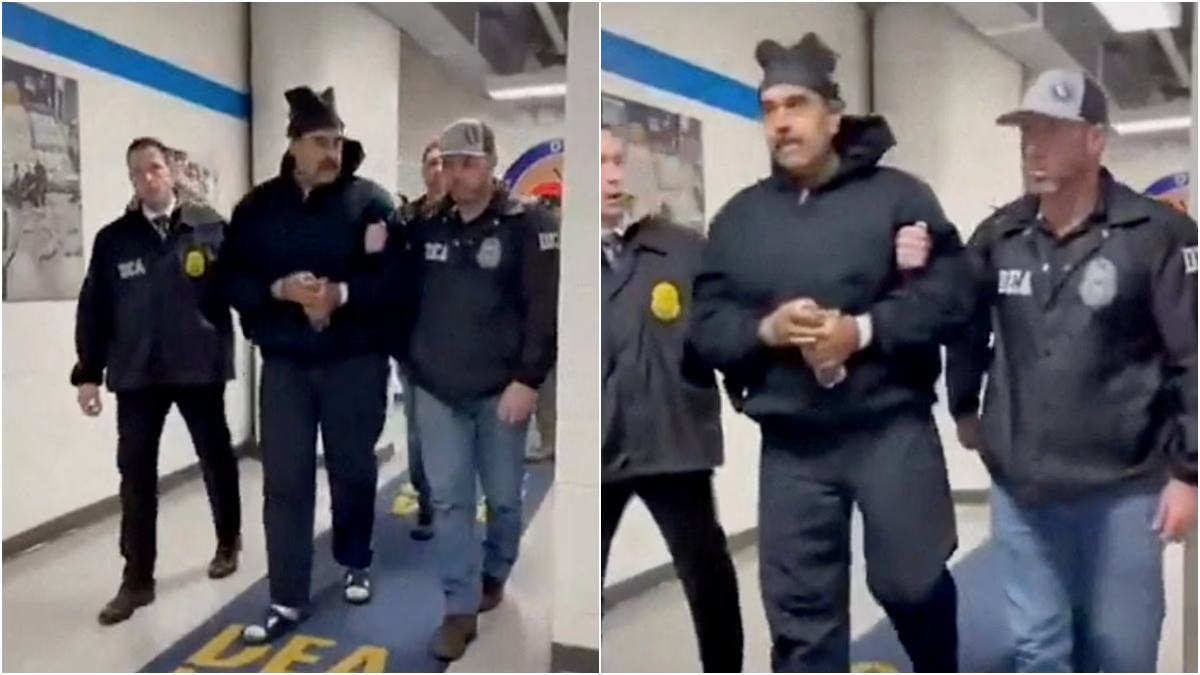
On January 3, in a breath-taking turn of events, the United States conducted military strikes in Venezuela's capital, Caracas, capturing current president Nicolás Maduro and his wife, Cilia Flores. This operation sent ripples across the globe. President Donald Trump declared that this move was intended to dismantle a supposed narco-terror network, whereas Caracas condemned it as an illegal act of war and a blatant violation of international law.
For months, the Trump administration accused Maduro of orchestrating drug trafficking into the United States with the intent to ruin American lives. This pressure escalated with substantial military deployment in the Caribbean region and lethal missile attacks on vessels alleged to be involved in drug smuggling. Following the successful military operation, President Trump announced the removal of Nicolás Maduro from power in Venezuela.
Trial Against Maduro in the US
Trump stated, 'Until a safe, orderly, and prudent transition of power occurs, the United States will govern Venezuela.' Nicolás Maduro faces four severe charges, including narco-terrorism alongside his wife Cilia Flores, his son, and three others, involving cocaine trafficking and conspiracies linked to machine guns and destructive weapons. Nevertheless, Venezuela has strongly condemned this action, labeling it a breach of international law. The Latin American country contends that Trump's true intent behind this move is to seize Venezuela's vast oil reserves and other natural resources.