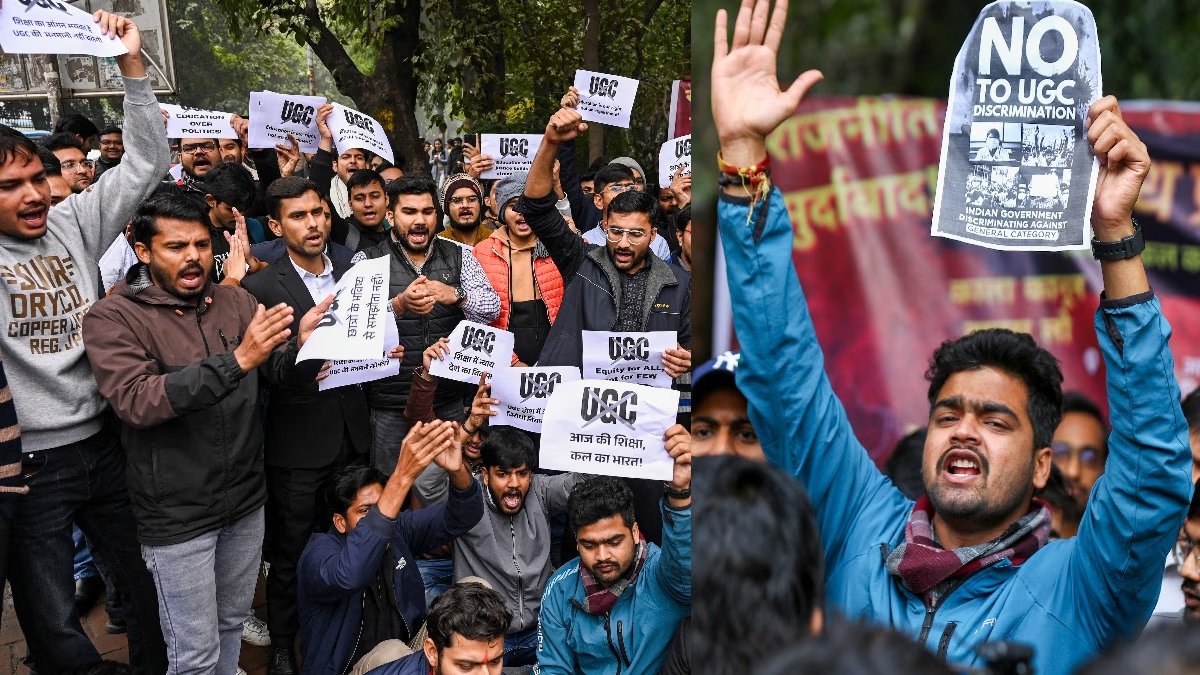
The UGC's new equity rule has sparked a significant debate in recent days, prompting a petition in the Supreme Court. This petition sought to declare Section 3(C) of the new regulation as unconstitutional. Now, the court has stayed the new rule. So, what exactly does this section entail?
In the midst of controversy surrounding the UGC's new rules for the Promotion of Equity in Higher Education Institutions Regulations, 2026, the Supreme Court has issued an immediate stay during the hearing. The court has directed that the old 2012 rules remain in effect. The petition, which challenged the constitutionality of Section 3(C), finds itself in opposition to the new rule.
The petition disputed a provision within these regulations aimed at promoting equality in higher education institutions, known as the Equity Rule 2026, which was enacted on January 13, 2026. The petitioner argued that Section 3(C) of the new rule is arbitrary and discriminatory, potentially marginalizing some groups from higher education. The plea called for declaring Section 3(C) unconstitutional.
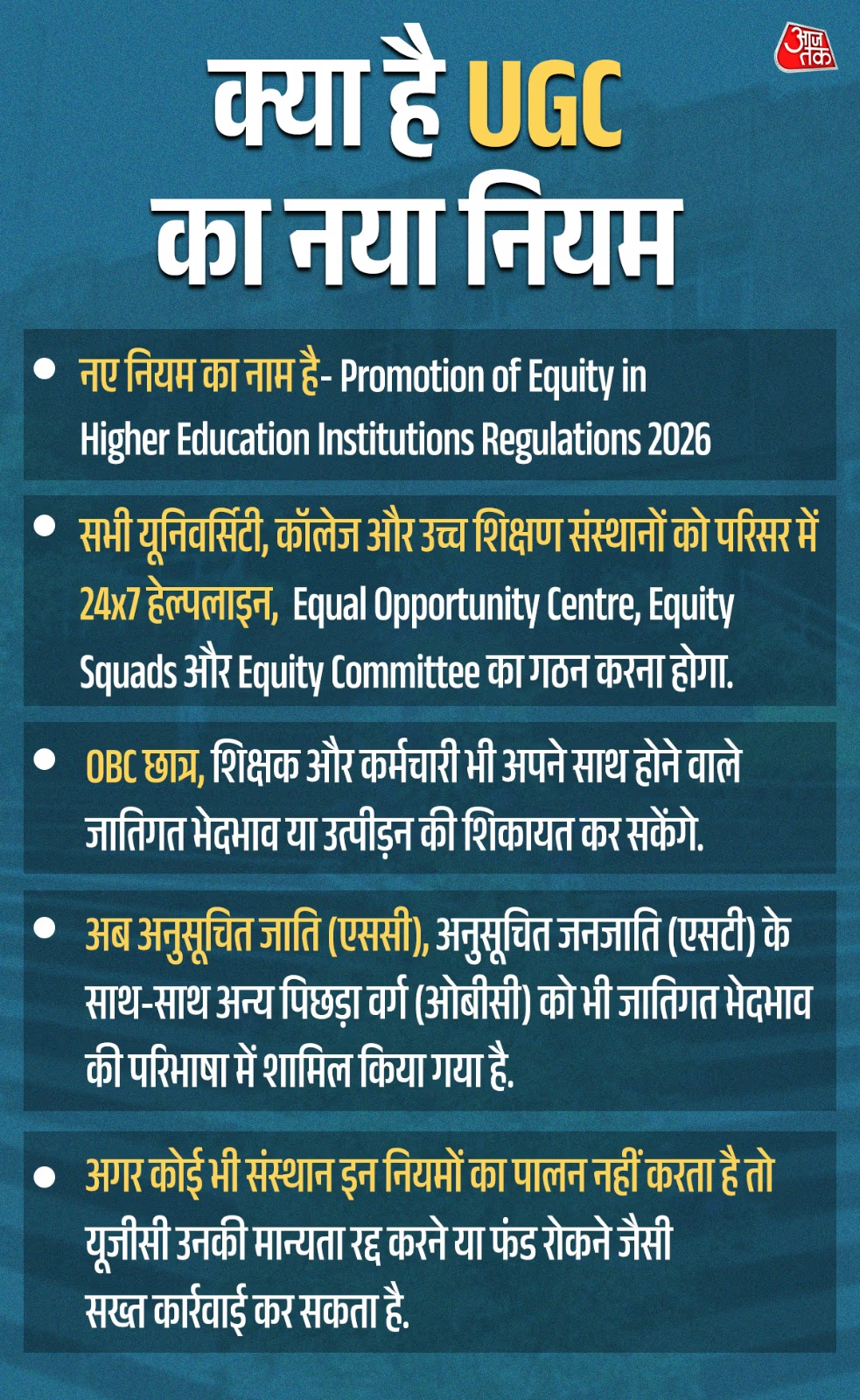
Source: aajtak
The petition argues that the provisions violate fundamental rights enshrined in the Constitution, such as equality, freedom of expression, and individual liberty. It also states that the rules contradict the objectives of the University Grants Commission Act, 1956, which aims to ensure equal opportunities in higher education.
Section 3(C) of the UGC's new equity rule states -
Caste-based discrimination means discrimination against members of scheduled castes, scheduled tribes, and other backward classes solely based on caste or tribal identity.
Read More: UGC's New Rule Challenged, Public Interest Litigation Filed in Supreme Court
The petition to the Supreme Court requested an examination of this provision's constitutional validity and urged the protection of students' fundamental rights. The Supreme Court, while issuing its stay, remarked critically on the provision's lack of clarity. During the hearing, petitioner's lawyer Vishnu Jain argued that the definition of discrimination in UGC's new regulation's Section 3C is fundamentally flawed, and contrary to the spirit of equality enshrined in the Constitution.