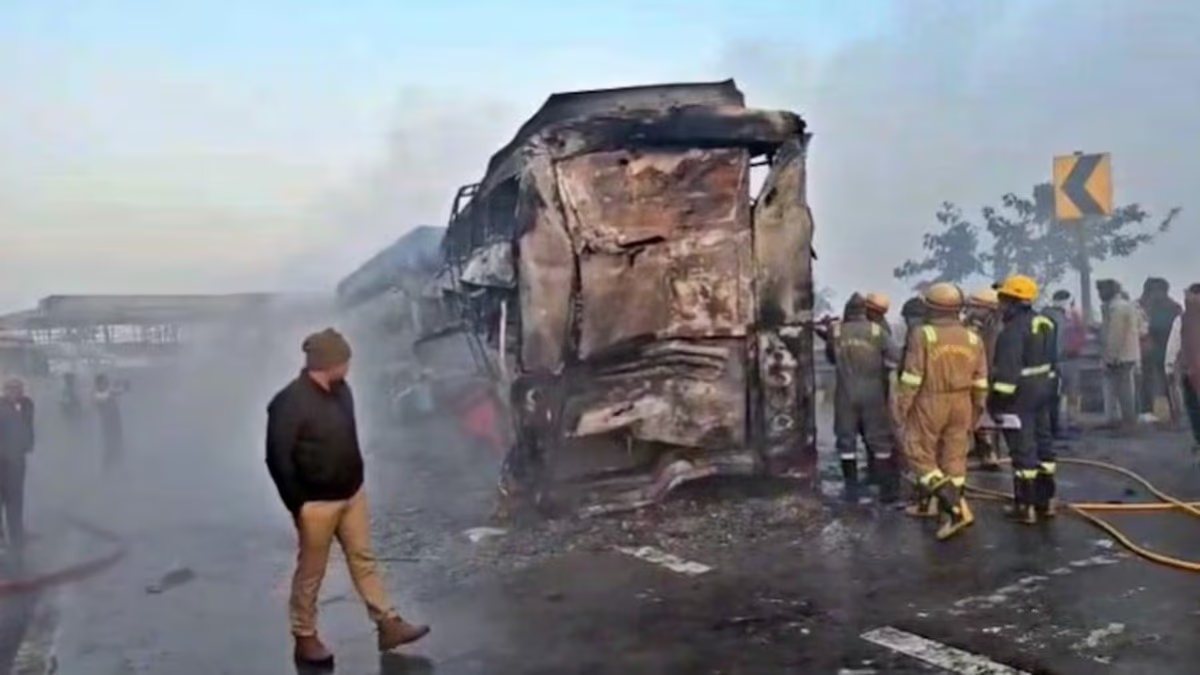
On December 16, a catastrophic road accident occurred on the Yamuna Expressway in Mathura, Uttar Pradesh, leaving most of the victims unidentifiable up until now. DNA testing has become the pivotal tool for identification. This tragedy, happening amid dense fog, involved collisions between eight buses and other vehicles, which resulted in fiery crashes, claiming dozens of lives and severely injuring many more.
Bodies Turned to Ashes
At the post-mortem house, the brought-in bodies were so badly charred that visual identification was nearly impossible. Amidst such heart-wrenching scenes, police and medical officials collected DNA samples from the bodies to enable families to recognize their loved ones and proceed with the last rites.
The Ongoing DNA Investigation
The DNA analysis is being led by Deputy Director Ashok Kumar at the Forensic Science Laboratory in Agra. According to him, this incident is extremely sensitive. The postmortem of 15 unidentified bodies has been conducted, with skeletal remains and teeth collected for testing. The task involves deep human emotions, prompting the collaboration of other scientists from Ghaziabad and Lucknow labs. Ashok Kumar believes they are on the verge of identifying many of the bodies soon.
Bones and Teeth, as Brittle as Coal
The intense fire that followed the accident has caused the bones and teeth to become fragile, complicating DNA extraction. Scientists have noted that conclusive identification will depend on extracting viable DNA from bone marrow or dental pulp.
15 DNA Samples Collected from Families
A dedicated team, including Agra's Scientific Officer Shashi Shekhar Pandey, Pavan Kumar, and other members, is working tirelessly. Furthermore, expert scientists from Lucknow and Ghaziabad have joined the investigation efforts. Police have reported that around 15 DNA samples have been collected from families, but results and confirmations are still pending. The families of the deceased, who are emotional and anxious, are visiting the forensic lab frequently, all hoping for swift identification of their loved ones' remains.