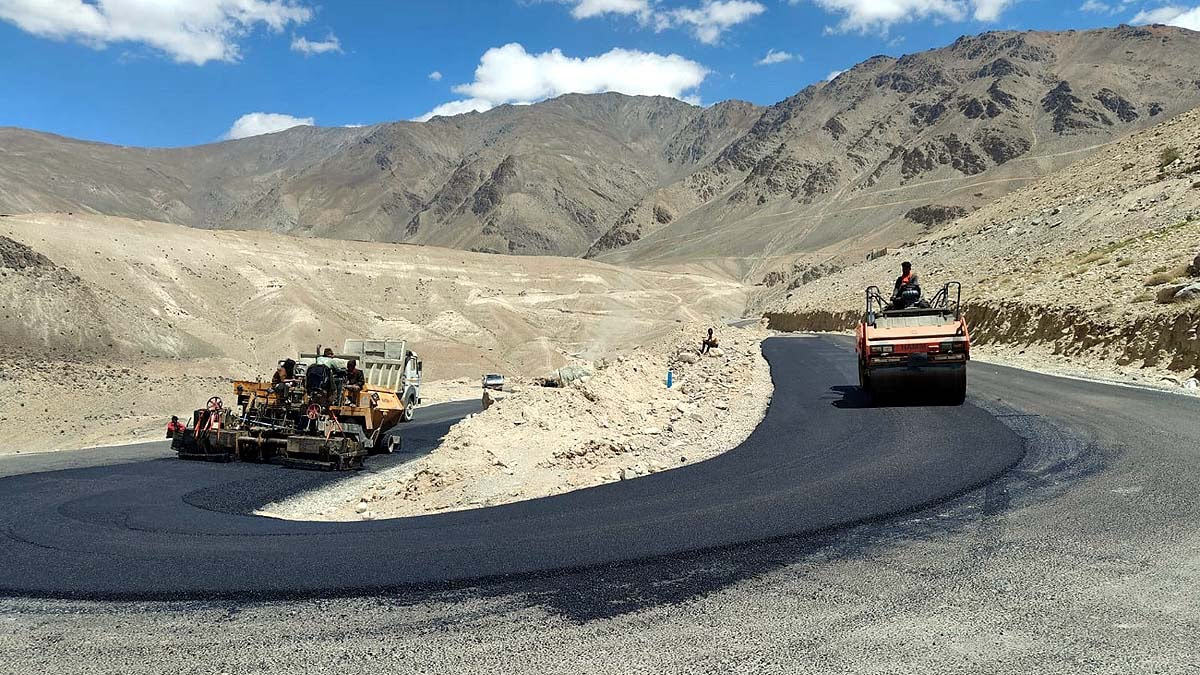
The American newspaper 'Wall Street Journal' (WSJ) recently portrayed India's infrastructure work along the India-China border as 'preparations for possible war'. The report suggests that India is investing hundreds of millions of dollars in constructing roads, tunnels, and airfields in the Himalayas to be ready for a potential future confrontation with China. Many view this report as incendiary.
Read Also: Army orders 20 drones for border areas, to be used on PAK-China borders
India is rapidly building roads, tunnels, landing strips, and military posts along its Himalayan border.
This endeavor began post the 2020 Galwan clashes when it became evident that India's troops and supplies couldn't match China's rapid mobilization.
The report's tone suggests an imminent large-scale military standoff between India and China.
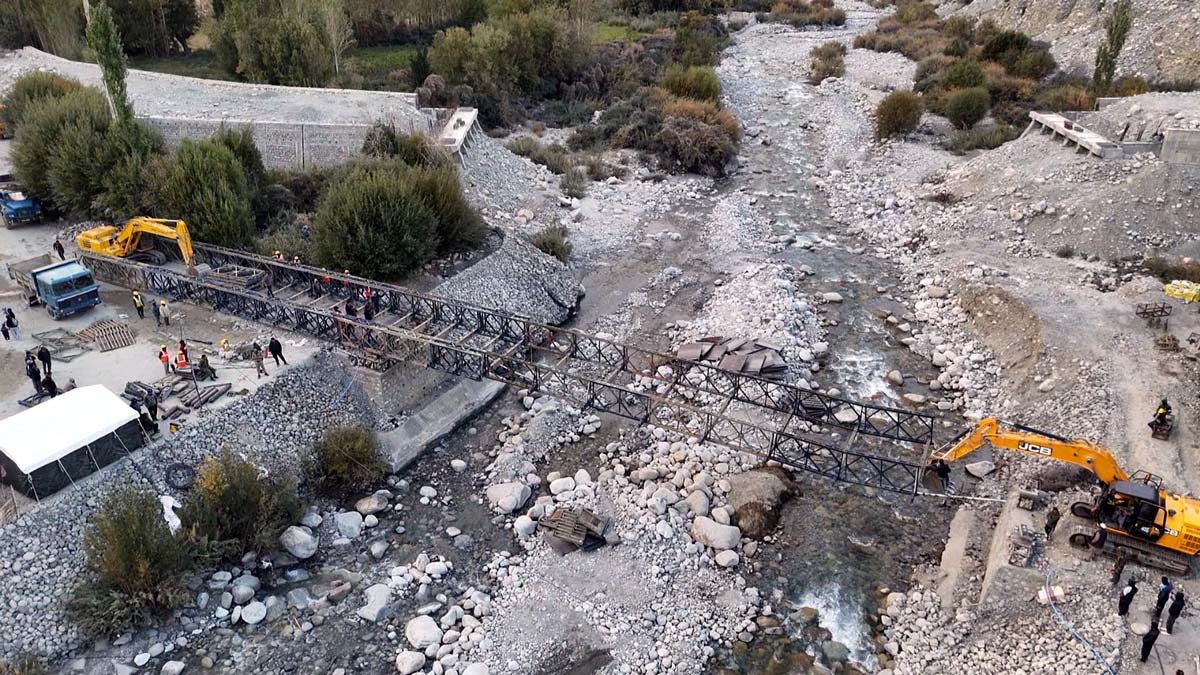
Source: aajtak
Experts and defense analysts emphasize that India's efforts are entirely defensive in nature. The aim is...
Maintaining year-round accessibility for troops and supplies in high-altitude, remote areas.
Addressing past vulnerabilities rather than preparing for an attack on China.
Deterring Chinese acts of aggression by raising their potential cost.
Since 2020, India and China have executed troop disengagements in multiple zones along the LAC. Agreements have been reached in contentious areas like Depsang and Demchok. Diplomatic dialogues and monthly meetings continue as both nations strive to stabilize relations.
Read Also: Beijing reacts to US report on India-China border, says relations are improving, do not incite
Many believe WSJ has presented a single-side view in its report.
It has labeled the Indian infrastructure solely as 'war preparations'.
Overlooked stories of peace efforts, talks, and reduced tensions.
This could fuel rumors of an impending India-China war.
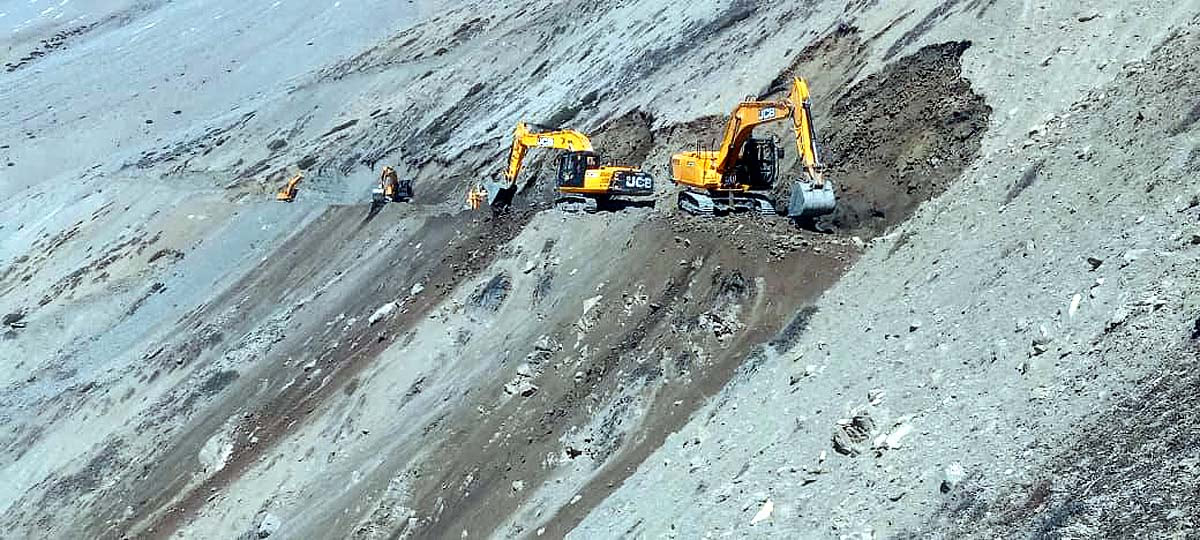
Source: aajtak
Defense experts assert that building robust infrastructure at the border is a sovereign right. It's not only vital for military needs but also for local convenience and economic growth. India's ongoing construction in the Himalayas has long been part of its national security strategy.
When reports like WSJ's portray this only as war preparations, it lacks balance. There's an underlying competition between the two Asian giants, yet diplomatic solutions are actively sought. Sensational news that spreads unnecessary panic doesn't aid the peace process.