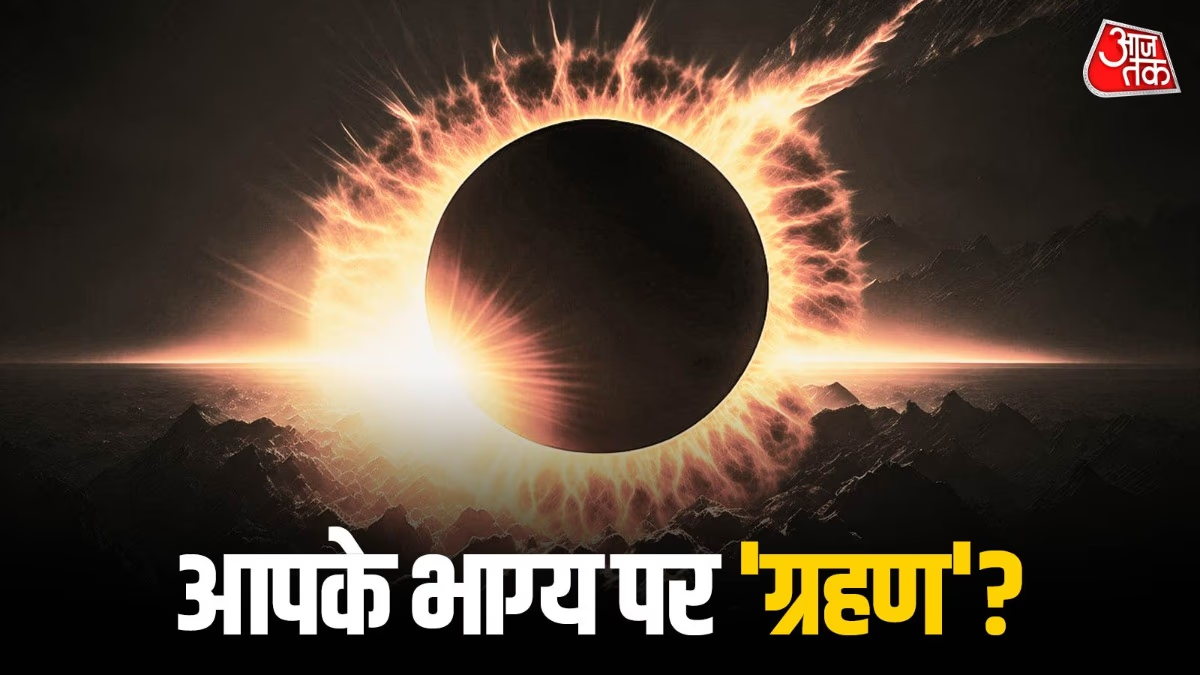
When two eclipses happen within a single month, it's often seen as inauspicious in astrology. According to ancient beliefs, eclipses occur due to Rahu and Ketu. As narrated in the Bhagavata Purana, Rahu and Ketu devour the sun and the moon, causing brief darkness. In astrology, Rahu is associated with sudden events, confusion, and politics, while Ketu signals separation, losses, or sudden changes.
Could There Be Negative Effects?
In astrology, the sun symbolizes power, leadership, government, and confidence, linking solar eclipses to significant decisions or political movements. The moon represents the mind and emotions, associating lunar eclipses with mood swings, anger, rumors, or stress. The text Brihat Samhita by Varahamihira notes that eclipses can impact governance, weather, and public life.
Exercise Special Precautions
During these solar and lunar eclipses, special care must be taken. Typically, the 15-day period from the solar eclipse to the lunar eclipse is inauspicious. This is because the solar eclipse is commencing with the start of the Panchak, specifically the Agni Panchak. According to astrology, when the moon transits through the constellations Dhanishta, Shatabhisha, Purva Bhadrapada, Uttara Bhadrapada, and Revati, it is referred to as Panchak, lasting for five days.
Source: aajtak
Why is Agni Panchak Dangerous?
Agni Panchak is considered dangerous and inauspicious because it brings risks of fires, fear of death, and accidents. More concerning is that these incidents could occur up to five times within these five days. Those experiencing Rahu-Ketu periods, or whose charts show weak suns or moons, might feel a negative impact during these eclipses and Agni Panchak.
Avoid Unnecessary Conflicts
It is crucial to steer clear of unnecessary disputes during this period, as eclipses primarily affect your mind, intellect, and social standing. Ketu, being a shadow planet, creates confusion.
Furthermore, avoid making decisions in anger, since Rahu undermines rational thinking. Decisions made in haste are never advisable. If caught in a dilemma, let the situation resolve naturally over time.
Take Care of Health
Health awareness is essential, as Agni Panchak also impacts well-being. Approach this period scientifically, noting that weather changes can affect health, with hot days followed by cool evenings. Avoid unnecessary travel; only venture out if necessary. The changes in the sun and moon's movements can also destabilize the mind.
Lastly, be prudent with your finances.
As Agni Panchak concludes, Holashtak begins. The eight days preceding Holi are also seen as inauspicious, warranting protective measures. Following Holashtak, the full moon day brings a lunar eclipse. The day of Holika Dahan is also linked with pyres, hence deemed inauspicious.
Global Impact?
Observing the broader world impact of these two eclipses, planetary movements will show a conjunction of Rahu and Mars from February 23 to April 2, 2026, termed Angarak Yoga in astrology, considered a period of quick reactions and stress. At the start of 2026, Rahu will be in Aquarius and Saturn in Pisces.
On February 23, Mars will enter Aquarius, creating Angarak Yoga with Rahu. By April 2, Mars will move to Pisces, aligning with Saturn until May 11. Astrologers caution that Mars's conjunctions with Rahu and Saturn could pose challenges for four zodiac signs, impacting world leaders associated with these signs.
Source: aajtak
Solar and Lunar Eclipses Within a Single Month
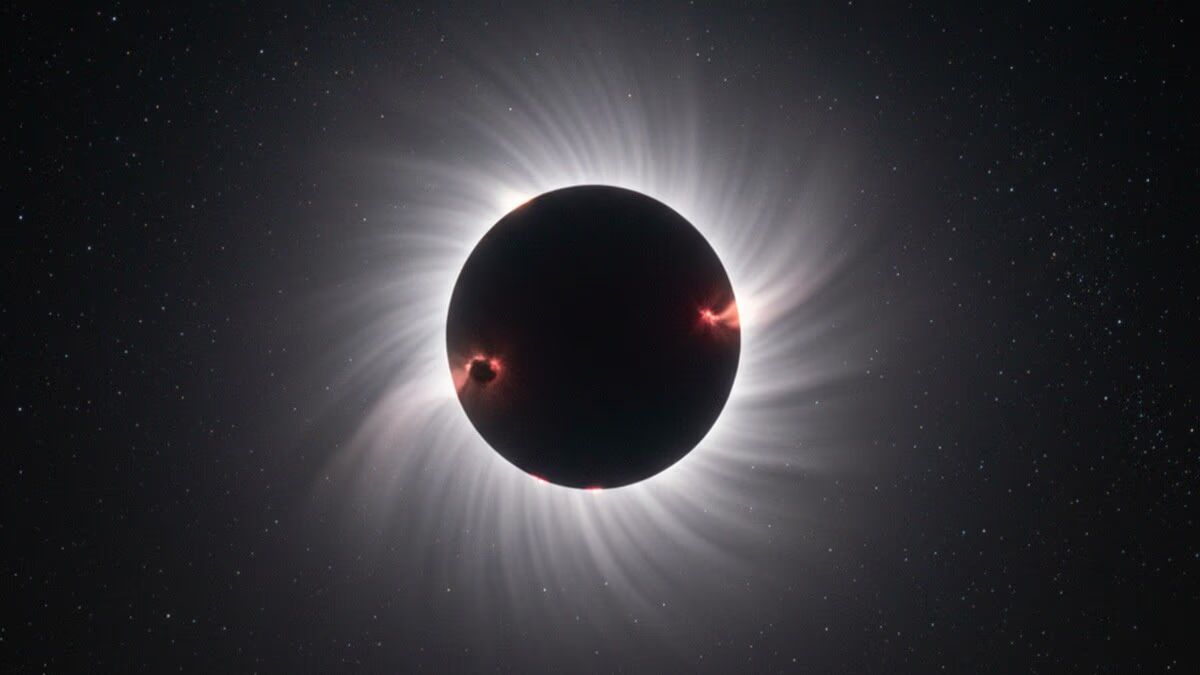
In 2026, four eclipses are expected. The first, a solar eclipse, will occur on February 17, 2026, followed by a total lunar eclipse on March 3, 2026. Eclipses are linked to energy shifts and social instability in astrology. However, the February 17 solar eclipse won't be visible in India but will be seen over African skies, while the lunar eclipse on Holika Dahan day will be visible in India. These two eclipses, happening around 15 days apart within one month, are regarded as difficult in astrology, fostering fierce conflicts and the potential for bloodshed.
Astrological conjunctions like Mars-Rahu and Sun-Rahu are seen as indicators of ‘immediate decisions, confrontation, and power pressure,’ potentially affecting political leadership. The eclipse dates (February 17, March 3) are seen as signals of negative impact on 'ruler-people conflicts,' economic stability, and military equilibrium. For some zodiac signs, the Venus-Mars conjunction around January 13-15 may bring good fortune, although it might also generate conflict energy.