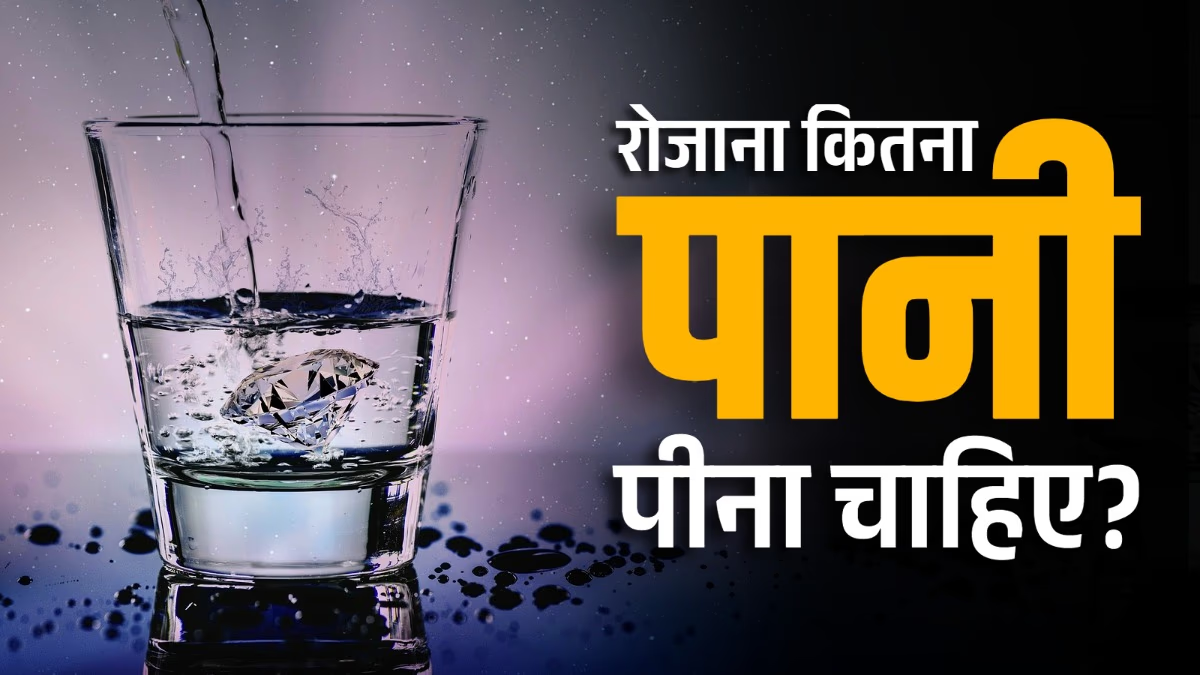
Guidelines for Daily Water Intake:
Our bodies are composed of around 60-70% water. Regular activities like sweating, urination, and breathing continually expel water from our bodies. We've always heard that drinking water is vital for health, but how much exactly? Some recommend 8 glasses, while others say just keep drinking. The truth is, just like shoe sizes aren't universal, neither is our water requirement—it depends on our bodies.
Experts suggest your body's need for water depends on your age and lifestyle. If you drink too little, you might get dehydrated; too much can burden your kidneys.
According to
and NHS General Practitioner Dr. Jonathan Webster, water needs shift with every age milestone. Let's decode your daily water requirement in simple language.
Approximately 70% of our body is water, but as we age, our metabolism and water retention capacity change.
Young children's skin and organs require more hydration because their bodies release water quickly. In contrast, older individuals' thirst 'sensor' diminishes, making it hard for them to detect dehydration. So, drinking water by age isn't just quenching thirst, but maintaining body balance.
Health experts warn incorrect water intake can lead to fatigue, headaches, and, in severe cases, 'hyponatremia' (low blood sodium).
Source: aajtak
Higher temperatures, exercise, or illness may increase this quantity, but excess water too can cause hyponatremia. Here's a guide on the water needs for each age.
The
suggests that children aged 1-3 need about 1 liter of water a day, including 20% from food. Children aged 4-8 require 1.2 liters, and those aged 9-13 need 1.6-1.9 liters of water daily.
Teenagers aged 14-18 are advised to drink 1.9-2.6 liters, with boys needing slightly more due to larger body sizes and higher activity levels.
For adults over 19, 3.1 liters for men and 2.7 liters for women is recommended, comprising 80% from drinks and 20% from food.
Pregnant women require about 3 liters, and breastfeeding mothers approximately 3.1 liters of water due to the extra water needed for milk production.
Individuals over 60 should aim for 1.6 to 2 liters of water daily, applicable to both men and women, because as age progresses, the sense of thirst diminishes, raising dehydration risks, according to Dr. Webster.
Mild dehydration can cause fatigue, irritability, memory loss, and depression. Severe cases may result in kidney stones, gallstones, constipation, UTI, and heat stroke. Athletes and the ill can face more issues as their thirst signals might fail.
Overhydration (beyond kidney excretion) can lead to hyponatremia, manifesting in low sodium levels causing confusion, nausea, seizures, and muscle spasms. Marathon runners and individuals with smaller body sizes are at a higher risk; hence, avoid drinking more than 1 liter per hour.
Dr. Rohit Sharma from Jaipur's Apollo Spectra Hospital suggests, 'Extreme or absent thirst can both be indicators of internal bodily processes. Thirst acts as the body's way to inform us of water shortage. It may increase due to dehydration, salty or spicy food, hot weather, excessive sweating, and physical labor.'
'Besides, abnormal thirst could be due to diabetes, thyroid issues, kidney disease, or side effects of certain medications. Persistent thirst despite drinking could indicate diabetes.'
'Alternatively, a lack of thirst is unusual, especially in seniors, whose thirst signal may diminish, leading to dehydration. Mental stress, neurological problems, or longstanding low water intake habits can suppress thirst, emphasizing the importance of adequate hydration daily, regardless of thirst cues.'
'If extreme or disappeared thirst persists, do not ignore it. Consult a doctor promptly; timely identification of causes can prevent serious health issues.'
Disclaimer:
This article provides general information. Before making any changes to your diet or dealing with health issues, always consult your doctor, nutritionist, or dietitian.